Forecourt stock audits and footfall. For every site, every shift.
Staff photograph coolers, shelves and food-to-go counters on the phones they already have, and a vision model turns each photo into stock levels. mmWave sensors show how customers move through the shop: footfall by hour, the zones they reach and when the till queue builds. Both land in one dashboard.
Start with a 7-day shelf audit · nothing to install
- Spec 01
- Coolers and food-to-go
- Spec 02
- Footfall and till queues
- Spec 03
- No video, no identities
- Till · conversion
- Receipts ÷ visits
- Shelf · Drinks coolers
- Fill, hour by hour
- Floor · Till queue
- 3 waiting
- Floor · footfall today
- 412
The gap
Forecourt shops run lean. Gaps and queues show fast.
Empty cooler facings
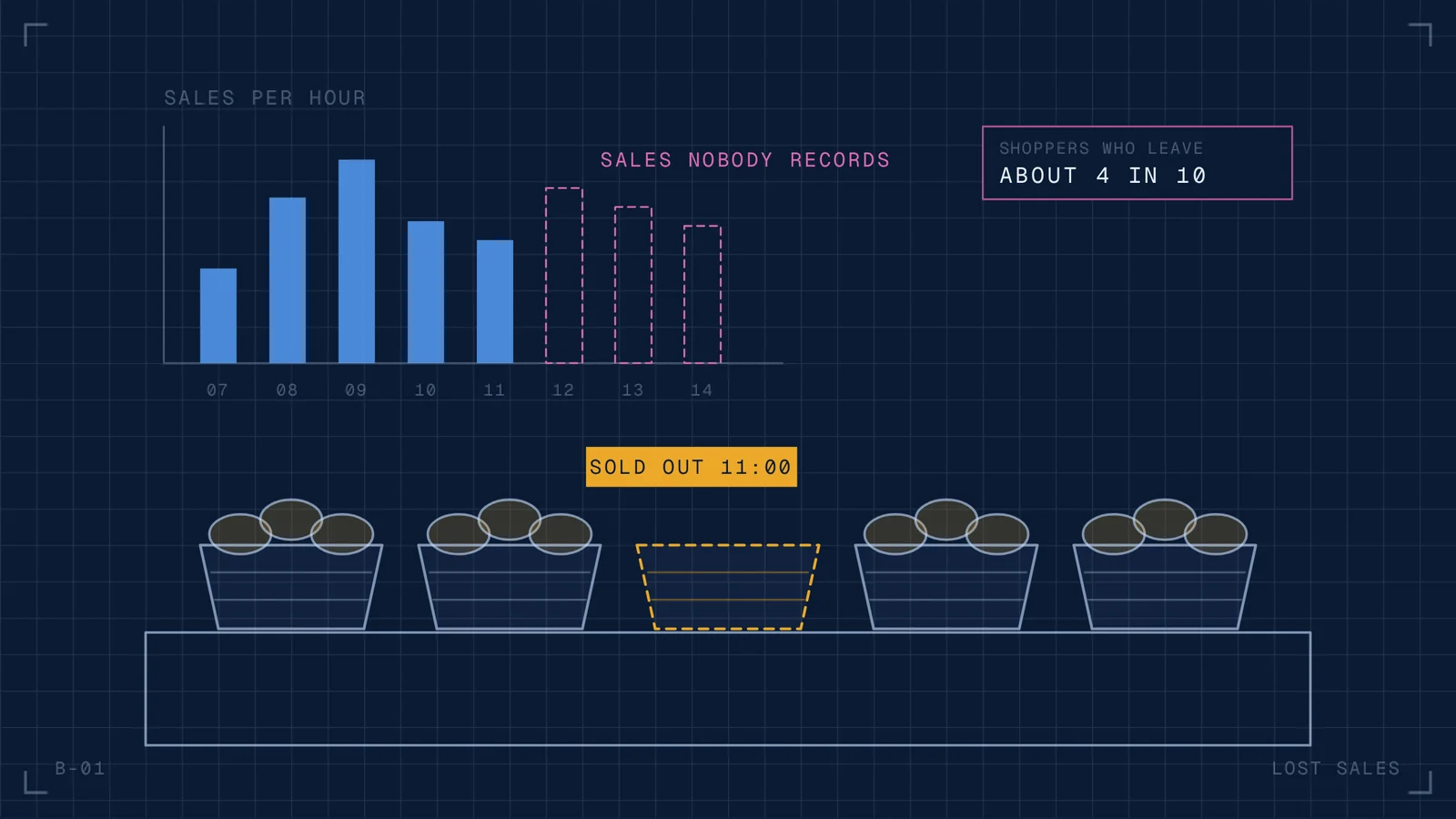
When shoppers find a product missing, the shop loses the sale in about four cases out of ten. A driver on a quick fuel stop won't wait for someone to check the back.
What does an empty shelf cost?Queues at the commuter peak
Fuel customers are on a short stop. Staffing for the peak means knowing when the till queue builds and how long it lasts, site by site, not guessing from the till roll.
How mmWave measures itMany sites, few visits
Area managers can't visit every site every day. A checklist says a task was ticked, not what the shelves looked like or how busy the shop was.
Three senses · one analytics layer
One analytics layer for gas stations. How people move, what is on the shelf, what they buy.
Three layers, read side by side: 60 GHz radar on the floor, computer vision on the shelves, and the till you already run.
Layer 01 · Floor
Radar turns movement into footfall.
Footfall by hour
How many fuel customers come into the shop, and when.
Till queues
How long the queue gets at the commuter peak, and how quickly it clears.
Zone activity
Which parts of the shop customers reach, from the coolers to the coffee machine.
Layer 02 · Shelf
Every display, hour by hour.
- Drinks coolers84% / 80%
- Snacks & car care54% / 78%
- Food-to-go counterSold out
- Coffee71% / 70%
Coolers and drinks
Stock levels per cooler and shelf, so gaps show up before the afternoon rush.
Food-to-go counters
How full the hot food and sandwich counters are, against the fill you expect for them.
Shelves and promotions
Snacks, confectionery, car care and seasonal displays, checked against how they should look.
Receipts from your POS
The till you already run, connected. No new devices in the shop.
Conversion per hour
Receipts divided by visits, hour by hour. People who walk in together and pay together count as one visit.
No receipt linked to a person
Conversion comes from counts, so a receipt never meets an identity.
Layer 01 · Floor · how it works
Queues at the till, traffic through the shop. No cameras.
Forecourt shops live on short visits. mmWave sensors measure how customers move through the shop from radar reflections, so you can staff for the peaks you can actually see.
- 01
Sensors on the ceiling
Compact 60 GHz radar sensors go on the ceiling, scoped to each location. One sensor covers one area, so larger floors use several.
- 02
Reflections, not images
The radar turns radio reflections off moving people into anonymous points. No pictures, no faces, and nothing read from anyone's phone.
- 03
Live next to the shelf data
Footfall, paths, dwell and queues flow continuously into the same dashboard as the shelf audits from the same store.
Read together
Read them together. Stock and footfall in one dashboard.
- 01
Fix the gaps at the peak
A cooler gap at the commuter peak costs more than one at midnight. Footfall by hour shows which gaps to fix first.
- 02
Restock in the quiet hours
See when the till queue builds next to when shelves run low, and plan restocking for the hours when staff aren't serving.
- 03
Compare sites fairly
A site with twice the footfall should run low faster. Reading stock next to traffic separates busy sites from struggling ones.
Privacy
We measure places, not people.
- Faces are blurred on capture, before a photo is stored or analysed.
- The radar records no images, reads nothing from phones and identifies no one.
- Conversion comes from counts: receipts divided by visits, hour by hour. No receipt is linked to a person.
- No biometric data is extracted or retained. Built and hosted in Europe, GDPR-compliant by design.
Notes
Questions, answered.
What gas stations operators ask us before rolling out.
01
What can be checked at a gas station?
On the shelf: cooler and drinks facings, snack and confectionery shelves, food-to-go and hot food counters, and promotional displays, each shown next to the level you expect for it. On the floor: footfall into the shop, till queues, dwell and which zones customers reach.
02
How does mmWave help a forecourt shop?
It measures queues at the till, traffic paths and dwell from radar reflections, with no images and no one identified. That shows when queues build, so you can plan staffing for the peaks, next to the stock data in the same dashboard.
03
How does footfall tracking work without cameras?
The sensors are 60 GHz radar. They measure how radio waves reflect off people moving through the space and turn the reflections into anonymous points, which give footfall, paths, dwell and queues. They record no images, read nothing from phones and identify no one.
04
Do we need to install cameras at our sites?
No cameras. Staff photograph coolers, shelves and food-to-go counters with the smartphones or tablets they already use. For footfall, dwell and queues, compact mmWave radar sensors go on the ceiling, scoped to each location, and they record no images.
05
Can we pull the results into our own systems?
Yes. Results are available through an API, so you can bring them into your own reporting. Managers get role-based access to their own sites, and store groups let you compare regions.
06
How long does a rollout take?
About two weeks for the shelf audits. Your team captures a first batch of photos, we train a model on your forecourt shops, and it goes live across every location. The mmWave layer is scoped to each location separately.
07
Are customers identifiable in the photos?
No. Every face is detected and blurred on capture, before a photo is stored or analysed, and the vision model reads products, not people. No biometric data is extracted or retained, and data is processed in the EU.
Library
Further reading
Guide
What does an empty shelf cost?
When shoppers find a product sold out, the shop loses the sale in about four cases out of ten. How to put a number on out-of-stocks, and why sales data hides them.
Comparison
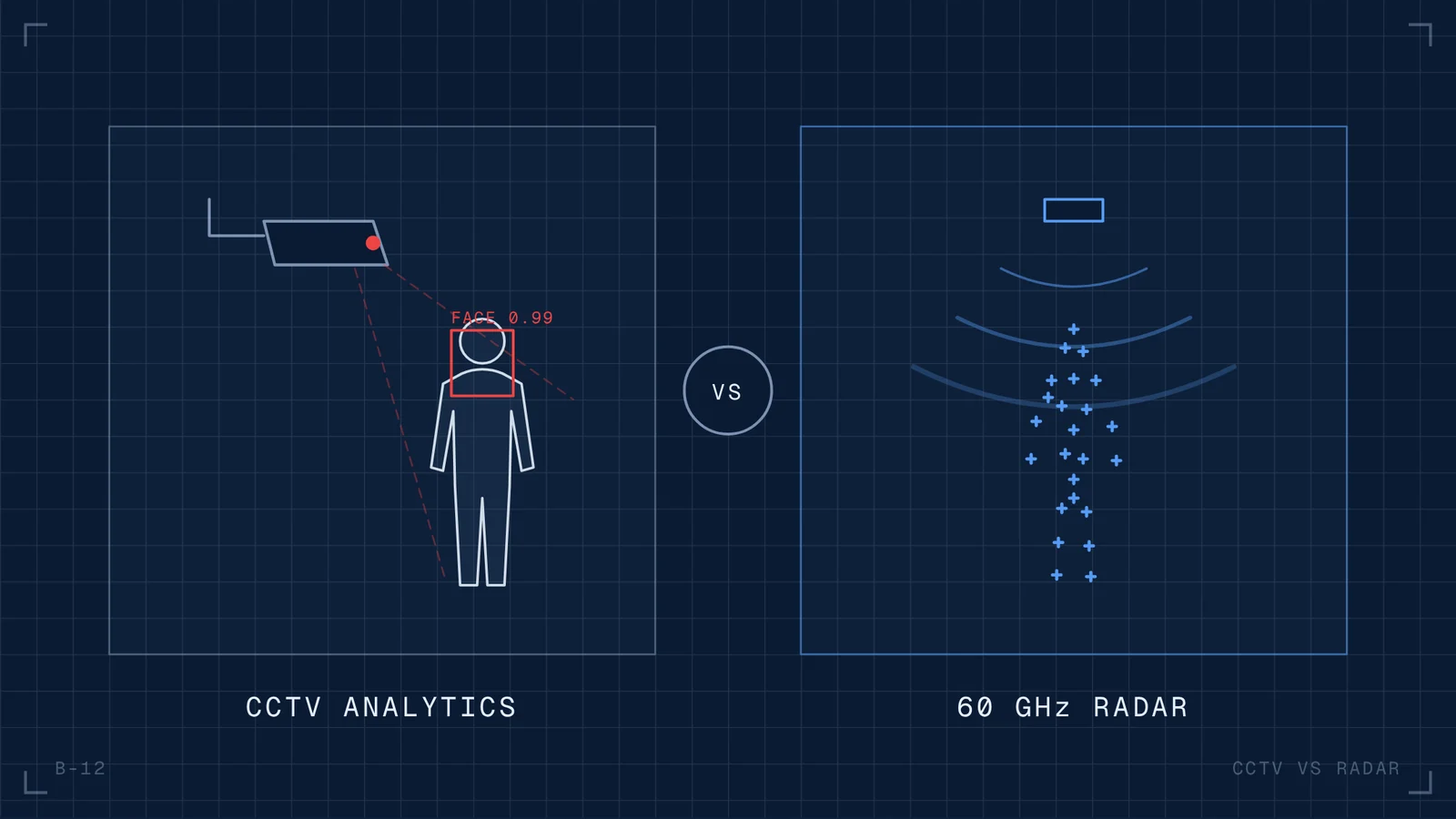
mmWave vs CCTV people counting
Video analytics reuses cameras and sees detail; mmWave radar works in any light and records no images. An honest comparison for store operators.
Comparison
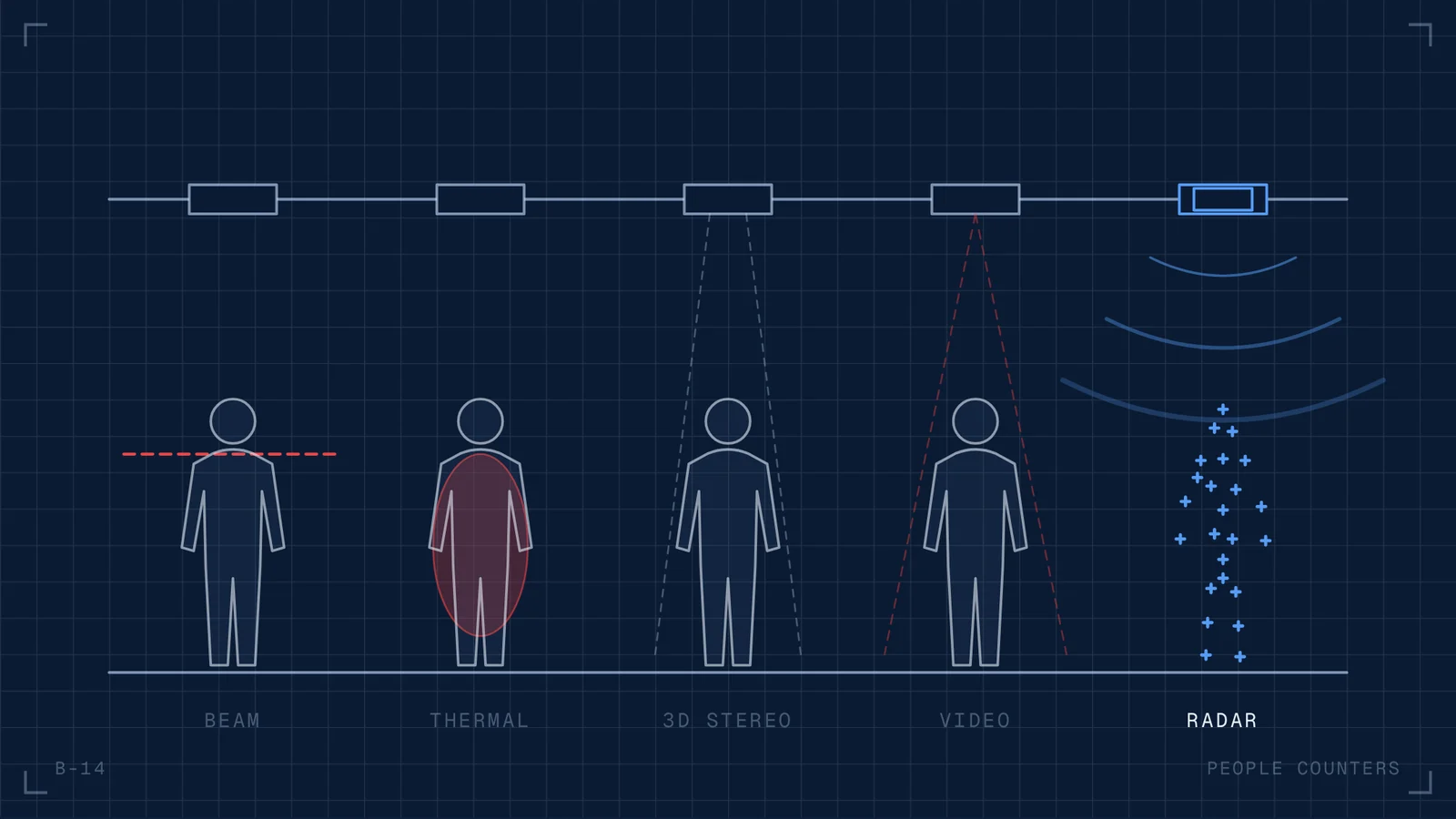
People-counting sensors compared: beam, thermal, 3D, video, and mmWave
Beam counters, thermal sensors, 3D stereo cameras, video analytics, and mmWave radar compared: what each counts, where each fails, and how to choose.